
Marshall County Property Tax Records
Marshall County property tax records are kept by the assessor and auditor-treasurer offices at 208 E Colvin Avenue in Warren, Minnesota. You can look up parcel data, check assessed values, and find tax payment history using the Beacon online portal or by reaching out to county staff directly. This page walks through how Marshall County property tax records are organized, how the assessment and billing process works, what payment deadlines you need to know, and how to appeal your property valuation if you think it is too high.
Marshall County Overview
How Property Taxes Work in Marshall County
Marshall County sits in the far northwest corner of Minnesota and is largely agricultural. Property taxes here follow the statewide framework set by the Minnesota Legislature. The county assessor values every parcel as of January 2 each year under Minnesota Statutes Chapter 273. That value is used to calculate the tax due the following year. Most land in Marshall County is farmland, so agricultural classification rules under Chapter 273 play a big role in how much owners actually pay.
Once valuations are set, the auditor-treasurer takes responsibility for billing. Tax statements are mailed by March 31. Marshall County splits taxes into two halves. The first half is due May 15. The second half is due October 15. Late payments collect interest under MN Statutes Chapter 279. Properties with long-unpaid taxes can eventually be forfeited to the state under Chapter 282.
Each fall, Marshall County sets levy amounts through the Truth in Taxation process under Chapter 275. County levies, school district levies, and township levies all combine into the final tax rate on your statement.
Find Marshall County Property Tax Records Online
Marshall County uses the Beacon platform by Schneider Geospatial for online property searches. The tool is free and open to the public. You can search by owner name, address, or parcel ID. Results include assessed values, tax history, land descriptions, and ownership details. Access the Marshall County Beacon portal directly at beacon.schneidercorp.com.
The county website at co.marshall.mn.us links to each department. The auditor-treasurer page covers tax statements and payments. The assessor page handles valuations and exemptions. The screenshot below shows the Marshall County auditor-treasurer department page, where you can find tax statement details and payment information.
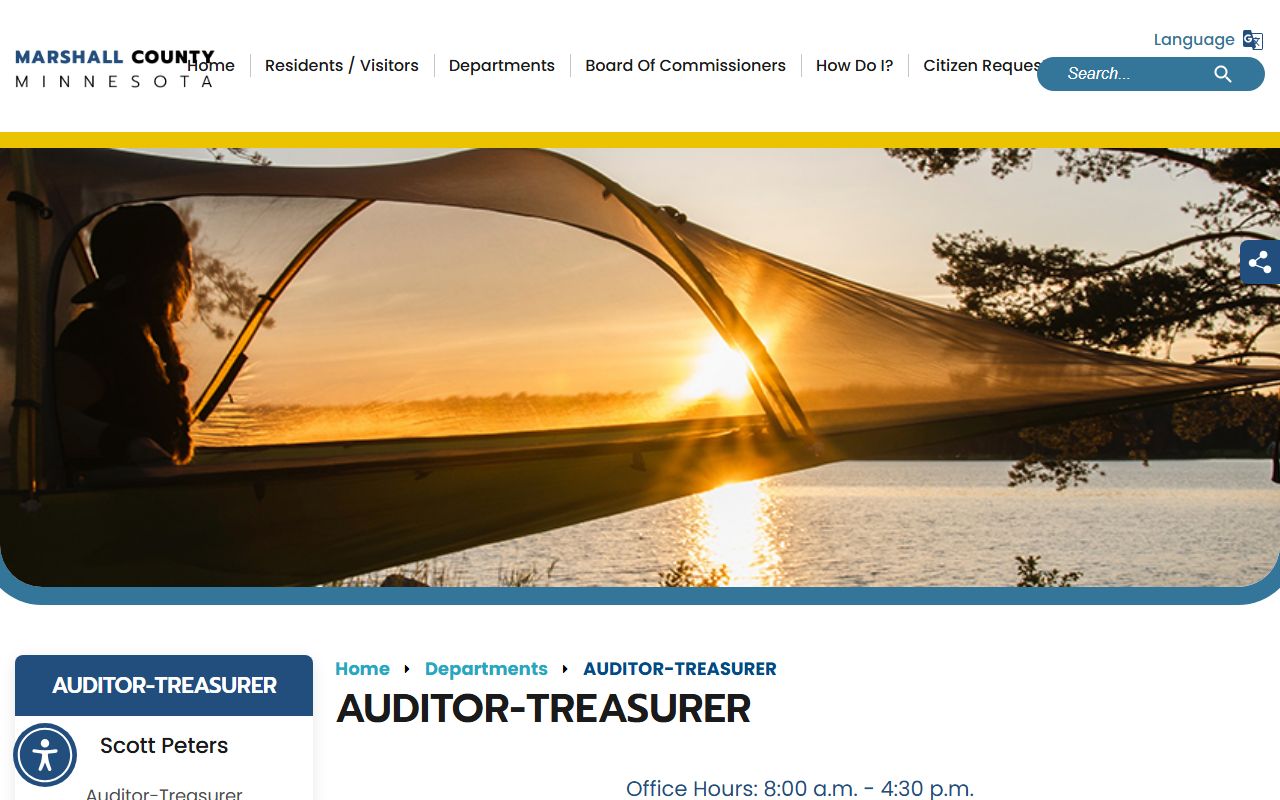
The auditor-treasurer page at co.marshall.mn.us/departments/auditor-treasurer/ covers payment options, tax statements, and delinquency information for Marshall County.
Marshall County Assessor Office
The Marshall County Assessor sets values for all real and personal property in the county each year. Agricultural properties, residential lots, and commercial buildings are all valued as of January 2. The assessor uses sales data, property inspections, and comparable market analysis to set each parcel's estimated market value. Under Chapter 273, the assessor must value all property at full market value unless a classification exception applies. Farm properties and agricultural land often carry a green acres classification that affects the taxable portion of the value.
The assessor department page at co.marshall.mn.us/departments/assessor/ lists the forms and steps to apply for homestead, agricultural, and other classifications. If you disagree with your assessed value, the assessor's office is the right first call. Below is a screenshot of the assessor department page.
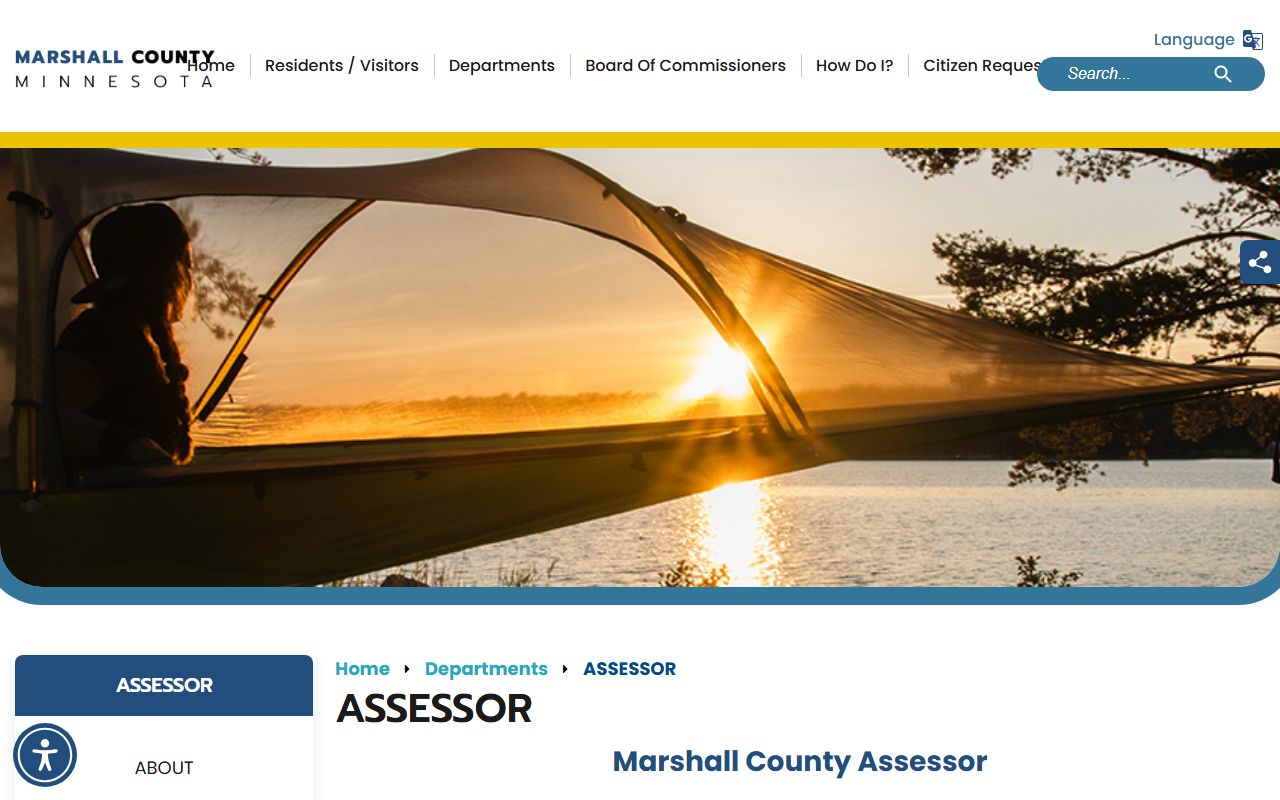
The Marshall County Assessor page covers classification questions, homestead applications, and the appeal process for property valuations.
| Office | Marshall County Assessor |
|---|---|
| Address | 208 E Colvin Avenue, Warren, MN 56762 |
| Phone | (218) 745-4851 |
| Website | co.marshall.mn.us/departments/assessor/ |
Paying Marshall County Property Taxes
The Marshall County Auditor-Treasurer at (218) 745-4824 manages all tax billing and payment collection. Tax statements arrive by March 31. The first half is due May 15. The second half is due October 15. If you own a homestead property and your total bill is under $100, you can pay it all by May 15. Payments can be made in person at 208 E Colvin Avenue in Warren.
Check the auditor-treasurer's page at co.marshall.mn.us/departments/auditor-treasurer/ for current methods including mail and online options. Always note your parcel ID number on any payment to make sure it gets applied to the right property. Missed payments trigger interest under Chapter 279, and sustained delinquency puts your property at risk of forfeiture.
Note: If you escrow your property taxes through a mortgage lender, your lender receives the tax statement. Confirm payment with both your lender and the auditor-treasurer's office if you have questions about whether your taxes were paid on time.
Homestead and Property Tax Relief in Marshall County
Homestead classification reduces the class rate applied to your property value, which lowers your tax bill. To qualify in Marshall County, you must own the property and use it as your primary residence. You need to occupy it by December 1 and apply by December 31 through the assessor's office. You must provide your Social Security number or ITIN so the state can verify the property is your main home. Under Chapter 273, homestead property carries a lower class rate than non-homestead residential parcels.
Marshall County also has agricultural property owners who can combine homestead status with farm classification, which can result in significant tax savings. The assessor's office can walk you through how those classifications work together. Reach them at (218) 745-4851 or at co.marshall.mn.us/departments/assessor/.
The Minnesota Property Tax Refund via Form M1PR is available to qualifying homeowners and renters statewide. The Minnesota Department of Revenue at revenue.state.mn.us administers the program. The refund is based on your income and what you paid in property taxes or rent that year.
Marshall County Land Records and Recorder
The Marshall County Recorder handles deed filings, mortgages, and other instruments that transfer or encumber real property. Every sale recorded here generates data the assessor uses to track market values. Deed taxes at recording are governed by MN Statutes Chapter 272. You can find the recorder's contact page at co.marshall.mn.us/departments/recorder/.
The Beacon system links ownership data to each parcel record. A single search on Beacon can show you the current owner, assessed value, tax history, and recent sales. This is handy for buyers, title researchers, or anyone trying to verify ownership in Marshall County. The screenshot below is from the main county site, which ties all departments together.
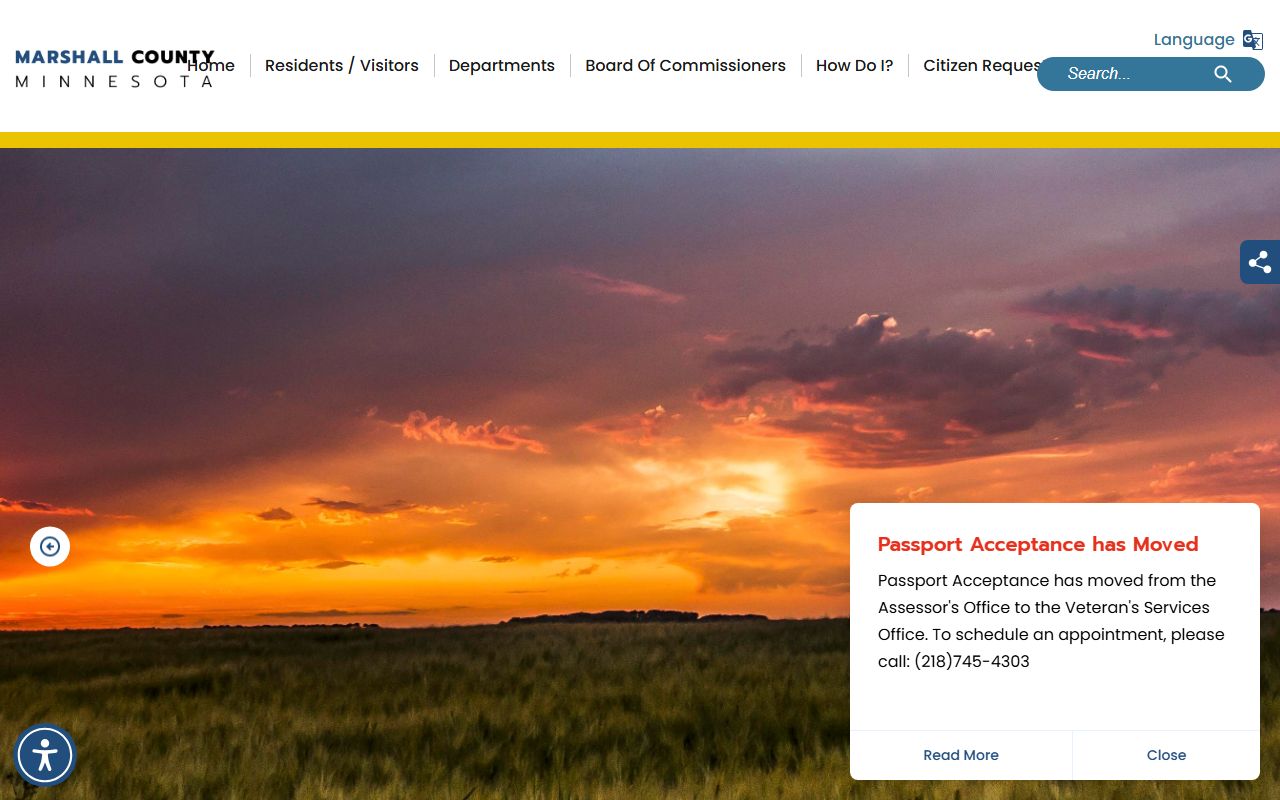
The Marshall County site at co.marshall.mn.us provides access to all county offices including the recorder, assessor, and auditor-treasurer in one place.
Appealing Your Marshall County Property Tax Assessment
You have the right to appeal your assessment if you think the assessor placed too high a value on your Marshall County property. Start with the assessor's office. Many cases are resolved at the first conversation. If you need more than that, bring your case to the Local Board of Appeal and Equalization, which meets in spring each year under Chapter 274.
If you still disagree after the local board, you can appeal to the County Board of Appeal and Equalization. The last stop is the Minnesota Tax Court. Under Chapter 278, you must file your Tax Court petition by April 30 of the year the taxes are payable. The Tax Court can be reached at (651) 539-3260 or through mn.gov/tax-court. Do not wait until late April to start the process.
Nearby Counties
These counties border Marshall County. Each handles property tax records locally through its own assessor and auditor-treasurer.