
Watonwan County Property Tax Records
Watonwan County property tax records are maintained by the county assessor and auditor-treasurer offices in St. James, Minnesota. You can search parcel data, look up assessed values, check tax payment history, and find due date information through the county's Beacon portal or by contacting county staff directly. This page covers how Watonwan County administers property taxes, where to find tax records online, what exemptions may reduce your bill, and how to appeal if you think your assessed value is wrong.
Watonwan County Overview
How Watonwan County Property Taxes Work
Property taxes in Watonwan County are set and collected at the county level under Minnesota's statewide framework. The county assessor values all real property as of January 2 each year under Minnesota Statutes Chapter 273. Watonwan County is a small, agricultural county in south-central Minnesota. Farmland makes up a large share of the tax base, and the assessor's office handles both residential and agricultural parcels through the annual valuation cycle.
The auditor-treasurer sends tax statements out by March 31. Taxes are due in two installments. First half is due May 15. Second half is due October 15. Missing either deadline leads to interest charges under Chapter 279. Each fall, Watonwan County holds Truth in Taxation hearings before finalizing levy amounts under Chapter 275. The county, local townships, the school district, and other taxing authorities all set their portions of the levy that together form your total tax rate.
Agricultural land in Watonwan County is valued using a soil productivity method rather than market prices. This method typically produces lower assessed values for qualifying farmland. The assessor's office is experienced with these classifications given the county's strong ag base.
Search Watonwan County Property Tax Records Online
The main tool for searching Watonwan County property tax records online is the Beacon platform by Schneider Geospatial, available at beacon.schneidercorp.com. Beacon lets you search by owner name, property address, or parcel ID. Results include assessed values, tax amounts, land and building breakdowns, and ownership history. The system is free to use and available around the clock.
The Watonwan County website at co.watonwan.mn.us links to the assessor, auditor-treasurer, and recorder departments. County offices are at 715 2nd Avenue S in St. James. The assessor's phone is (507) 375-1215. The auditor-treasurer can be reached at (507) 375-1210. Both offices are your best contacts for questions about a specific parcel or tax statement.
The Minnesota Department of Revenue publishes statewide property tax data and levy summaries at revenue.state.mn.us/property-tax-data-and-statistics, which includes Watonwan County. The screenshot below is from the DOR's main portal, which serves as the statewide hub for property tax information across all Minnesota counties.
The DOR at revenue.state.mn.us provides statewide guidance, forms, and data that apply to property owners in Watonwan County.
Watonwan County Assessor Office
The Watonwan County Assessor values all real and personal property in the county. The office covers homes, farms, commercial property, and vacant land. Assessed values are set as of January 2 under MN Statutes Chapter 273. Agricultural land uses a productivity-based valuation method, while residential and commercial property uses market value comparisons.
For homestead applications, classification questions, and initial valuation disputes, the assessor's office at co.watonwan.mn.us/departments/assessor/ is the starting point. If a conversation with the assessor doesn't resolve your concern, you can present your case at the Local Board of Appeal and Equalization in spring under Chapter 274.
| Office | Watonwan County Assessor |
|---|---|
| Address | 715 2nd Avenue S, St. James, MN 56081 |
| Phone | (507) 375-1215 |
| Website | co.watonwan.mn.us/departments/assessor/ |
Paying Watonwan County Property Taxes
The Watonwan County Auditor-Treasurer handles all property tax billing and collection. Tax statements mail by March 31 each year. You pay in two installments. First half is due May 15. Second half is due October 15. If you owe less than $100 total and your property has homestead status, you can pay the full amount by May 15.
Pay in person at the auditor-treasurer's office at 715 2nd Avenue S in St. James. Phone: (507) 375-1210. The auditor-treasurer page at co.watonwan.mn.us/departments/auditor-treasurer/ has current payment methods. Have your parcel ID ready for any transaction. Late payments accrue interest under Chapter 279, and long-term unpaid taxes can lead to forfeiture proceedings under Chapter 282.
The image below is from the Minnesota DOR's interactive property tax data tool, which includes Watonwan County levy and rate history.
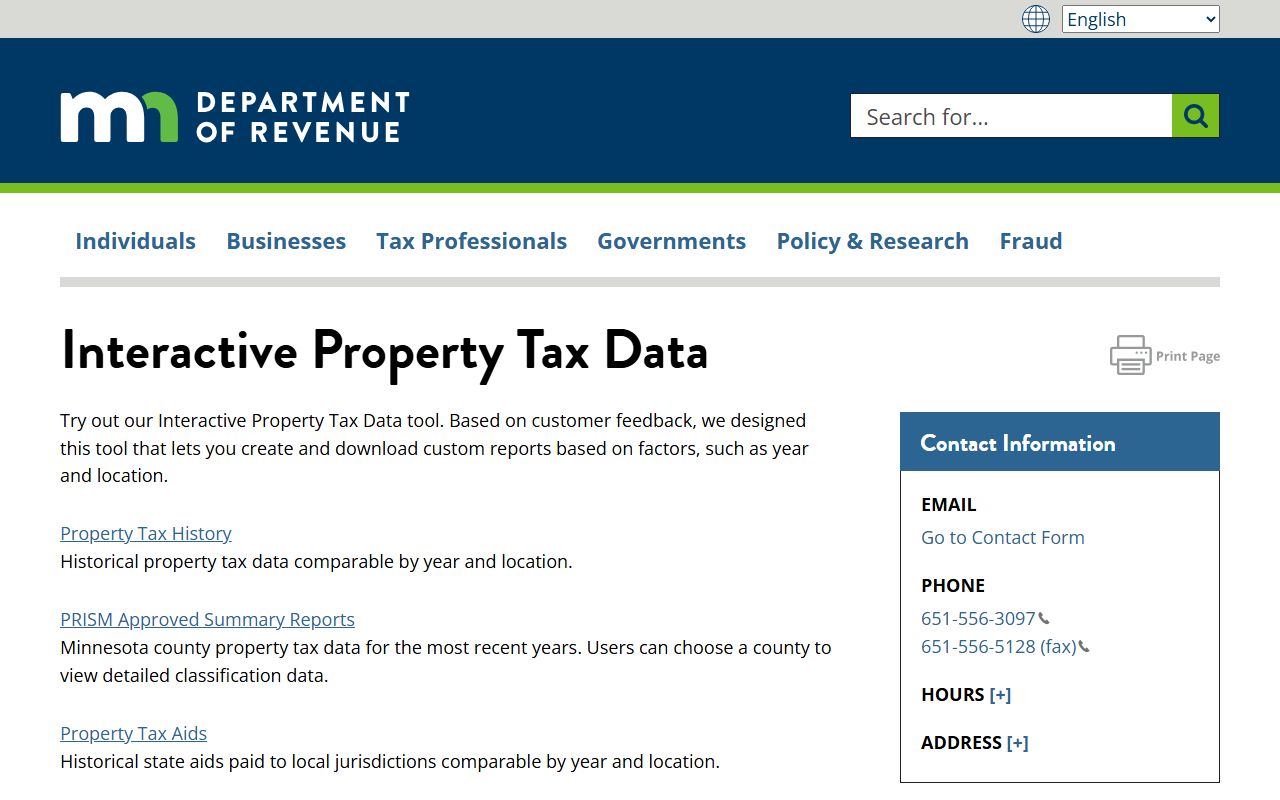
You can explore Watonwan County levy trends and rates at revenue.state.mn.us/interactive-property-tax-data using the state's interactive data tool.
Homestead and Agricultural Exemptions in Watonwan County
Homestead classification lowers the class rate on your primary home, reducing what you owe in property taxes. In Watonwan County, you must own and occupy the property as your main home by December 1 and apply through the assessor's office by December 31. The homestead class rate under Chapter 273 is lower than the non-homestead rate, so this classification can save a meaningful amount each year.
Agricultural homestead classification is available to Watonwan County farmers who own and operate farmland in the county. Qualifying land is valued using a soil productivity method instead of market sales. This typically results in a lower taxable value than market-value assessment. You must live on or near the land to qualify. Check with the assessor's office at (507) 375-1215 for details on the ag homestead application process.
The Minnesota Property Tax Refund using Form M1PR helps offset taxes paid by eligible homeowners and renters. The refund is available statewide and is administered by the Minnesota Department of Revenue at revenue.state.mn.us. Filing every year is worth the effort if your income qualifies.
Watonwan County Land Records and Recorder
The Watonwan County Recorder maintains deeds, mortgages, plats, and other instruments that connect to property tax records. When land changes hands, the deed is recorded here. The deed tax collected at that point is tracked under MN Statutes Chapter 272. Those sales feed into the assessor's review of local market values. The recorder's page at co.watonwan.mn.us/departments/recorder/ explains how to request document copies.
For title research or older ownership histories, the recorder is your best source. Beacon also links parcel and ownership data, which is useful for a quick overview of any Watonwan County property. For more detailed searches, contact the recorder's office directly in St. James.
Appealing a Watonwan County Property Assessment
If you think your assessed value in Watonwan County is too high, contact the assessor's office first. Bring any evidence that supports a lower value, such as recent sales of comparable properties or an independent appraisal. Many valuation questions get settled at this stage. If not, bring your case to the Local Board of Appeal and Equalization in spring. The board operates under Chapter 274 and has authority to adjust assessed values.
After the local board, you can escalate to the County Board of Appeal and Equalization. From there, you can file a petition with the Minnesota Tax Court. The Tax Court takes property appeals from all 87 Minnesota counties. Call them at (651) 539-3260. File by April 30 of the year your taxes are payable under Chapter 278. Missing that deadline typically bars a formal appeal for that tax year.
Nearby Counties
These counties share a border with Watonwan County. Each manages its own property tax records and assessments through local offices.